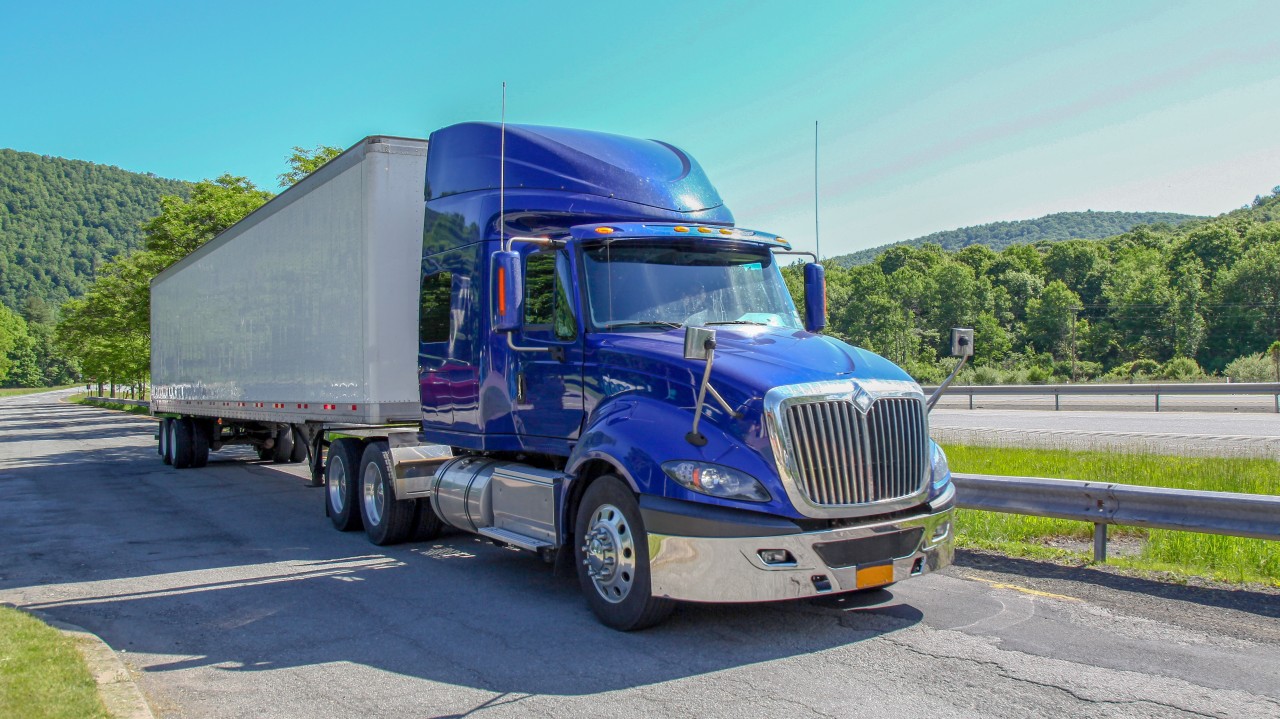
Florida commercial vehicle businesses operate in a wide range of industries, including construction, moving, passenger transportation, agriculture, freight, and delivery services.
Many must maintain a USDOT number and accurate federal registration information.
However, USDOT registration is not the same as operating authority, state vehicle registration, IRP, IFTA, or annual UCR.
For new entrants and growing fleets, understanding these distinctions helps prevent filing errors and inconsistent company records.
Who Needs a USDOT Number in Florida?
Federal USDOT registration generally applies to qualifying interstate commercial motor vehicle operations.
Florida also applies commercial motor carrier requirements to certain intrastate activities.
Not every vehicle used commercially requires a USDOT number. The applicable rules depend on factors such as vehicle weight, passenger capacity, hazardous materials, and the nature of the operation.
Businesses should verify their classification before applying.
Interstate vs. Intrastate Classification
Interstate commerce generally involves transportation across state lines or other movements falling within the federal definition of interstate commerce.
Intrastate transportation takes place within Florida under circumstances that do not constitute interstate commerce.
A trip that begins and ends in Florida may still be part of a broader interstate shipment.
The company’s reported classification should reflect its actual transportation activities.
How to Apply for a USDOT Number
FMCSA launched Motus, its modernized USDOT Registration System, on May 19, 2026.
The system supports new USDOT registration, company updates, operating authority actions, and authorized account management.
Applicants should prepare accurate legal business information, addresses, contact details, operation classifications, and fleet information.
The authorized company official should control account access and retain filing confirmations.
Does a USDOT Number Include Operating Authority?
No.
Certain for-hire interstate carriers need separate FMCSA operating authority.
Applicable insurance filings and a BOC-3 process agent designation may also be required.
A business should verify authority status before providing transportation services that require it.
An active USDOT number alone does not establish every necessary credential.
What Is the MCS-150?
The MCS-150 Motor Carrier Identification Report concerns information associated with a company’s USDOT registration.
The record may include:
- Legal business name and DBA
- Physical and mailing addresses
- Contact information
- Interstate or intrastate classification
- Cargo categories
- Power-unit counts
- Driver counts
- Mileage information
The company should keep its record aligned with actual operations.
When Should Florida Carriers Update Their MCS-150?
FMCSA generally requires updates when reportable company information changes and according to the normal biennial schedule.
A business that changes its address, operating classification, fleet size, or other reportable information should review the applicable update instructions.
Do not assume that the biennial deadline is the only time a filing may be needed.
How Is the Biennial Deadline Calculated?
Under the normal schedule, the last digit of a USDOT number determines the filing month.
The next-to-last digit determines whether the filing year is odd or even.
For example, a USDOT number ending in 42 ordinarily has a February filing month in an even-numbered year.
The update is generally required even when company information has not changed.
What Changed in 2026?
FMCSA announced on September 10, 2026, that it had temporarily suspended enforcement of certain biennial updates and associated USDOT-number inactivation for updates due on or after June 1, 2026.
The suspension was introduced during Motus stabilization.
It is temporary and does not permanently repeal registration update requirements.
Carriers should monitor official FMCSA instructions and keep business information accurate.
Florida IRP and IFTA Are Separate
Florida-based interstate carriers may need apportioned registration through IRP and fuel-tax credentials through IFTA.
These programs have their own eligibility standards, filings, and records.
Florida’s IFTA guidance identifies qualified motor vehicles using axle and weight criteria, including vehicles with three or more axles regardless of weight and certain vehicles or combinations exceeding 26,000 pounds.
The company’s IRP and IFTA records should use consistent identifying information.
Neither filing updates the USDOT record automatically.
Commercial Vehicle Markings
Covered vehicles must display the required carrier identification.
Applicable federal marking rules generally require the carrier name and USDOT number on both sides of the power unit, with specified legibility and visibility standards.
A carrier should confirm the marking rules applicable to its vehicles.
Incorrect markings can create avoidable roadside problems.
What Does SAFER Show?
FMCSA’s SAFER Company Snapshot provides selected public carrier information.
It can include:
- USDOT status
- Company name and address
- Operating classification
- Reported vehicles and drivers
- Inspection and crash data
- Available safety ratings
Carriers should periodically compare the public record with their current business information.
Can an MCS-150 Update Remove Safety Violations?
No.
An MCS-150 update can correct certain company information.
It does not automatically remove inspection violations, change crash records, or alter a safety rating.
If a safety record is inaccurate, the carrier should determine whether the appropriate review process, such as DataQs, applies.
Clearinghouse and Drug Testing Are Separate
A USDOT number does not establish that a company’s drivers are fully qualified.
Depending on the operation, employers may need Driver Qualification Files, DOT drug and alcohol testing, Clearinghouse queries, hours-of-service records, and vehicle maintenance documentation.
Covered employers generally must conduct full pre-employment Clearinghouse queries and annual queries for applicable CDL drivers.
Those requirements are separate from MCS-150 filings.
Does a Florida Carrier Need UCR?
Certain interstate motor carriers, brokers, freight forwarders, and leasing companies must register annually under UCR.
The 2027 UCR registration period opened October 1, 2026, with registration and payment required before January 1, 2027.
An MCS-150 update does not complete UCR registration.
How to Keep Your USDOT Record Organized
Assign an authorized company official to manage registration access.
Review business information when operations change.
Keep copies of filing confirmations and agency correspondence.
Verify public registration information after processing.
Maintain a separate calendar for UCR, insurance, operating authority, and driver compliance responsibilities.
Frequently Asked Questions
Does every Florida commercial vehicle need a USDOT number?
No. Requirements depend on the applicable federal and state rules.
Can I update my USDOT information myself?
Yes. Eligible businesses may complete applicable actions through official FMCSA systems.
Is the MCS-150 the same as operating authority?
No. Operating authority is separate.
Did FMCSA cancel biennial updates?
No. The agency temporarily suspended certain enforcement actions during the Motus transition.
Does UCR payment update SAFER?
No. UCR registration and USDOT company information are separate.
Keep Your Florida USDOT Information Accurate
Accurate registration information helps Florida carriers maintain consistent records across federal systems and business documents.
MOTUS – MCS-150 Prepayment provides private assistance with USDOT registration information, MCS-150 filings, and related administrative requirements.
Visit MOTUS – MCS-150 Prepayment or call (800) 924-1130 for assistance reviewing your Florida USDOT and MCS-150 responsibilities.
MOTUS – MCS-150 Prepayment is a private third-party service and is not affiliated with FMCSA, the U.S. Department of Transportation, or Florida government agencies. Eligible businesses may complete applicable federal registration actions directly without paying a third-party service fee.